
Arts Blog

An Official UCSD Libraries Blog | Blog Home Page

A Brief History of John Baldessari

Video narrated by Tom Waits!

Love it.

Categories: All!, just art, Uncategorized Comments: 0

Walters Museum uploads 19,000 photos to Wikimedia Commons

The Walters Art Museum in Baltimore, Maryland, has donated more than 19,000 freely-licensed images of artworks to Wikimedia Commons. The Walters’ collection includes ancient art, medieval art and manuscripts, decorative objects, Asian art and Old Master and 19th-century paintings.

The images and their associated information will join our collection of more than 12 million freely usable media files, which serves as the repository for the 285 language editions of Wikipedia. ‬Check it out!!

Categories: All!, Database News, just art, Uncategorized Comments: 0

ARTstor = The Great Campus Race = ?


Did you know that the UCSD Library gives you access to more than one million digital images in the arts, humanities, and sciences? The ARTstor Digital Library includes of that, plus software tools to view, present, and manage images.

The images in ARTstor come from all over the world, but over 250,000 come from our very own University of California.  You can use images from ARTstor for research, teaching, presentations, and as a clue to direct people to a checkpoint on campus.

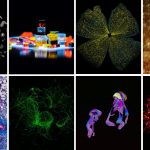
Enjoy some samples of the fine images included in the collection:


Categories: All!, Community Arts Events Comments: 0

UCSD Libraries’ Book Collection Contest

Current UCSD students are invited to participate in the UCSD Libraries’ 11th annual Book Collection Competition! Collect books, build your own libraries, celebrate the printed word, and win!

Two $500 prizes will be awarded, one to an undergraduate and one to a graduate student.

Categories: All!, Community Arts Events Comments: 0

Stylophone: The Greatest Little [Musical] Instrument of the [Last] Century? *

The UCSD Arts Library presents an exhibit** of Stylophones on the lower level, West wing of Geisel Library at UCSD. Exhibit opens March 28th and closes April 30.

Opening event: Wednesday, March 28th at 12:30 p.m. features a premiere of new works for Stylophone by composer Pea Hicks. Additional event: Sunday, April 15th, 2:30 p.m., features a premiere of a new work for multiple Stylophones by composer Scott Paulson.

About the Stylophone:

In 2002, David Bowie made a surprising Stylophone confession: “It’s the only instrument I take on holiday with me to compose on.” In fact, David Bowie’s 1969 album “Space Oddity” was composed entirely on a Stylophone. The small British company that manufactured the instrument (Dubreq) was surprised to hear this news, as they had invented and marketed the instrument merely as a musical toy.

Invented in 1967. the Stylophone is a pocket electronic musical synthesizer. Originally invented by Brian Jarvis as a toy and made available to the general public in 1968, the little instrument was presented as a novelty electronic organ with an iconic transistor radio look… Read more…

Categories: All!, Arts Library Events & Exhibits Comments: 0

R.I.P. Mike Kelley

Via ArtInfo:

Artist Mike Kelley has passed away at his home in Los Angeles, having apparently taken his own life. The tragic news was confirmed to BLOUIN ARTINFO by Helene Winer, of New York’s Metro Pictures gallery, a long-time associate of the artist.

“It is totally shocking that someone would decide to do this, someone who has success and renown and options,” said Winer. “It’s extremely sad.” She added that the artist had been depressed.

Kelley was born in 1954 in a suburb of Detroit, Michigan. He became involved in the city’s music scene as a teen, and while a student at the University of Michigan, formed the influential proto-punk band Destroy All Monsters with fellow artists Jim Shaw, Niagara, and Cary Loren (a retrospective devoted to Destroy All Monsters was held at L.A.’s Prism gallery last year). Together, the band hatched a style of performance that skirted the edge of performance art.

After graduating college in 1976, he moved to Los Angeles to attend the California Institute of the Arts, studying alongside teachers like John Baldessari and Laurie Anderson. Music continued to be a constant passion: he formed another band, “Poetics,” with fellow CalArts students John Miller and Tony Oursler.

Categories: All!, Articles, just art Comments: 0

R.I.P. Don Cornelius

Sad news. (via NPR)


Categories: All!, Music, Uncategorized Comments: 0

Alan Lomax ‘Global Jukebox’ Goes Digital

One of the greatest ethnomusicologists ever is getting a wider audience.


From the NYT Online:

A decade after his death technology has finally caught up to Lomax’s imagination. Just as he dreamed, his vast archive — some 5,000 hours of sound recordings, 400,000 feet of film, 3,000 videotapes, 5,000 photographs and piles of manuscripts, much of it tucked away in forgotten or inaccessible corners — is being digitized so that the collection can be accessed online. About 17,000 music tracks will be available for free streaming by the end of February, and later some of that music may be for sale as CDs or digital downloads.

On Tuesday, to commemorate what would have been Lomax’s 97th birthday, the Global Jukebox label is releasing “The Alan Lomax Collection From the American Folklife Center,” a digital download sampler of 16 field recordings from different locales and stages of Lomax’s career.

MORE

Categories: Articles, Music, Streaming Resources, Uncategorized Comments: 0

National Kazoo Day!

You missed it! (That’s okay, I did too.) But the Arts Library didn’t!

From the Huffington Post Online:

Jan. 28 is celebrated as National Kazoo Day,a day when, according to organizers, Americans are supposed to take time to recognize the kazoo, that musical instrument that takes only a minute to master for a lifetime to annoy.

But while the kazoo can be irritating when played by a hyperactive 5-year-old, it is a legitimate musical instrument, according to Scott Paulson, who uses kazoos to help provide soundtracks at silent movie screenings.

“It can be annoying, but it can be a delightful instrument,” Paulson told HuffPost Weird News. “It’s known mostly as a child’s toy, but it has a history of being a ritual instrument in Africa.”

Paulson says those early kazoos were used in rituals where the natives would disguise their voices using an animal horn and the membrane from spider eggs.

“It’s basically a mask of the voice,” he said.

Legend has it that the modern kazoo was invented in 1850 by former slave Alabama Vest of Macon, Ga., who devised the plans and than had it built by clockmaker Thaddeus von Clegg, a German immigrant. It was introduced two years later at the 1852 Georgia State Fair, but the familiar sub shape wasn’t created until 1902.

Click here for more video and to read the entire article!!

The 10 Best iPhone and iPad Apps for Art Teachers 2010

Look here for a list of the best art apps for teachers!

Categories: All!, Articles, just art Comments: 0
Older Posts »

Archives